What whites don't know about racism
By Tim Wise
Updated 5:45 PM ET, Wed November 25, 2015

26 photos: In the news: Conversations about race
Edgar Antillon, co-owner of Rubbin' Buttz BBQ and Country Cafe in Milliken, Colorado, drew criticism for offering a "White Appreciation Day" discount on June 11. What started as a joke about how there's no holiday that celebrates "the white community" was been misinterpreted as a racially charged promotion, Antillon said.
Hide Caption
14 of 26

26 photos: In the news: Conversations about race
Officer Eric Casebolt resigned on June 9, days after a YouTube video showing his response to reports of fighting at a McKinney, Texas, pool party sparked swift allegations of racism. Critics decried the white officer for cursing at several black teenagers, unholstering and waving his gun at boys and throwing a 14-year-old girl to the ground, his knees pressed down on her back. Casebolt's attorney said race had nothing to do with how the officer responded.
Hide Caption
15 of 26

26 photos: In the news: Conversations about race
U.S. Rep. Loretta Sanchez apologized on May 17 for an ethnically touchy gaffe that was caught on cell phone video. Sanchez was ad-libbing at a California Democratic Party convention when she made a stereotypical Native American "war cry."
"I'm going to his office, thinkin' that I'm gonna go meet with woo-woo-woo-woo, right? 'Cause he said 'Indian-American,'" she said, using the gesture to try to discern between Indian-Americans -- with ancestry from India's subcontinent -- and Native Americans. Many in the audience at the Indian-American caucus reacted with silence.
"I'm going to his office, thinkin' that I'm gonna go meet with woo-woo-woo-woo, right? 'Cause he said 'Indian-American,'" she said, using the gesture to try to discern between Indian-Americans -- with ancestry from India's subcontinent -- and Native Americans. Many in the audience at the Indian-American caucus reacted with silence.
Hide Caption
16 of 26

26 photos: In the news: Conversations about race
Fury erupted in May over incoming Boston University sociology and African-American studies professor Saida Grundy's tweets about white men, race and slavery. Her personal Twitter account was made private, but the Boston Globe reported some of the tweets: "why is white america so reluctant to identify white college males as a problem population?" and "every MLK week i commit myself to not spending a dime in white-owned businesses. and every year i find it nearly impossible." A few days after the debate went into overdrive, Grundy made a statement to the Boston Globe.
"I regret that my personal passion about issues surrounding these events led me to speak about them indelicately," she said.
"I regret that my personal passion about issues surrounding these events led me to speak about them indelicately," she said.
Hide Caption
17 of 26

26 photos: In the news: Conversations about race
Loretta Lynch was sworn in as the U.S. attorney general on April 27. The nomination of Lynch, the country's first African-American woman to serve in the role, was held up more than five months over politicking in the Senate. Democrats claimed the voting delay was racially motivated, despite GOP protestations otherwise.
Hide Caption
18 of 26

26 photos: In the news: Conversations about race
Freddie Gray died on April 19 after allegedly suffering a devastating spinal injury while in police custody. Six Baltimore police officers have been indicted on charges connected with the African-American man's death. All have pleaded not guilty. Activists have claimed race played a role in Gray's arrest and the way officers treated him. Protests and riots broke out in Baltimore on the day of Gray's funeral.
Hide Caption
19 of 26

26 photos: In the news: Conversations about race
North Charleston police officer Michael Slager was fired from his job and then charged with murder in the shooting of 50-year-old Walter Scott. Slager pulled over Scott on April 4, reportedly for a broken brake light. Scott was later shot in the back by Slager as he was running away. Scott was black and Slager is white. A bystander recorded the shooting, and the graphic footage sparked outrage and reignited a national conversation around race and policing. Slager's attorney has said that there was a violent struggle before the officer opened fire, that his client plans to plead not guilty and that race has nothing to do with the case. Prosecutors say Slager showed malice of forethought and "executed" Scott. The family of Scott and the city of North Charleston have reached a $6.5 million settlement.
Hide Caption
20 of 26

26 photos: In the news: Conversations about race
While Mindy Kaling was working on her Fox sitcom, "The Mindy Project," her brother, Vijay Chokal-Ingam, admitted he pretended to be black to get into medical school. The revelation came in April as Chokal-Ingam, who is of Indian descent, was pitching a book about his experiences as a "hard-partying college frat boy who discovered the seriousness and complexity of America's racial problems while posing as a black man."
Hide Caption
21 of 26

26 photos: In the news: Conversations about race
On April 1, a noose was found hanging from a tree at Duke University. Social media pictures spread quickly, causing outrage on campus. Later that day, the Black Student Alliance hosted a march across campus. Hundreds of students of all races marched, chanting, "We are not afraid. We stand together."
Hide Caption
22 of 26

26 photos: In the news: Conversations about race
In March, Starbucks received mix responses to its "Race Together" campaign. The company ran full-page ads in The New York Times and USA Today announcing the initiative. Starbucks held open forums for workers to talk about race, and baristas in cities where forums were held began writing the slogan on customers' cups, aiming to spark a dialogue.
Hide Caption
23 of 26

26 photos: In the news: Conversations about race
Thousands of people marked the 50th anniversary of "Bloody Sunday" in Selma, Alabama. President Obama made a rousing speech on racial progress in a diverse country. "Our march is not yet finished. But we are getting closer," he said. The violent confrontation with police and state troops on the Edmund Pettus Bridge on March 7, 1965, marked a pivotal point in the Civil Rights Movement.
Hide Caption
24 of 26
26 photos: In the news: Conversations about race
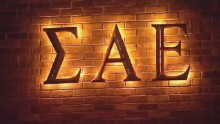
The University of Oklahoma severed ties with the Sigma Alpha Epsilon fraternity in March. A video anonymously sent to the school's newspaper on March 7 showed the fraternity chanting, "There will never be a ni**** SAE. You can hang him from a tree, but he can never sign with me." Two members who were leading the chant were expelled. "The song is horrific and does not at all reflect our values as an organization," said Blaine Ayers, executive director of SAE.
Hide Caption
25 of 26

26 photos: In the news: Conversations about race
Uproar broke out when White Pride Radio put up a billboard reading, "It's NOT racist to love your people" in Harrison, Arkansas. Thomas Robb, the national director of Knights of the KKK, said there was no racist intent with the billboard. "If anybody sees racism in that billboard, then they themselves are racist," Robb told CNN in January.
Hide Caption
26 of 26

26 photos: In the news: Conversations about race
Harvard University police said they were investigating a possible hate crime at the law school after someone covered portraits of black faculty members in tape, according to university officials. Some photographs were defaced with strips of black tape and discovered on November 19. Take a look at other events that brought discussions of race relations and identity to the forefront in 2015.
Hide Caption
1 of 26

26 photos: In the news: Conversations about race
Tim Wolfe, president of the University of Missouri, resigned from his post on November 9, 2015, amid a controversy regarding race relations at the school. Wolfe and the rest of the school's administration had been accused of taking little to no action after several racial incidents on campus. A day before the resignation, black players on the school's football team said they would essentially go on strike until Wolfe resigned or was fired.
Hide Caption
2 of 26

26 photos: In the news: Conversations about race
In September, 14-year-old Ahmed Mohamed was arrested for making what appeared to be a bomb. The "bomb" was actually a clock he had made on his own. "I built a clock to impress my teacher but when I showed it to her, she thought it was a threat to her," Ahmed said. Outrage over the incident lit up social media as #IStandWithAhmed started trending worldwide on Twitter. Ahmed got an invitation to the White House after the incident.
Hide Caption
3 of 26

26 photos: In the news: Conversations about race
On July 23, the WWE terminated its contract with legendary wrestler Hulk Hogan after the National Enquirer released a transcript of statements he made that included racial slurs. The remarks were recorded in an "unauthorized sex tape," according to the Enquirer, and included the N-word in reference to the dating life of his daughter, Brooke. Hogan apologized for the offensive language.
Hide Caption
4 of 26

26 photos: In the news: Conversations about race
Officer Ray Tensing fatally shot Samuel Dubose, 43, on July 19 after a struggle at a traffic stop over a missing license tag, Cincinnati police said. Dubose was driving away when Tensing shot him in the head, police said. Tensing said he feared for his life. However, prosecutors said DuBose was not acting aggressively. The case quickly drew attention from "Black Lives Matter" protesters, who accused the white officer of using excessive force on Dubose, who was black. Tensing, who's been charged with murder and voluntary manslaughter, has pleaded not guilty.
Hide Caption
5 of 26

26 photos: In the news: Conversations about race
Sandra Bland died at Waller County Jail in Texas on July 13, three days after being arrested for allegedly making an improper lane change. During the traffic stop, authorities say she was belligerent. Authorities say there was no foul play involved in her death. They say Bland hanged herself with a trash bag from a metal barrier that separated the bathroom from the rest of her cell. Her family has said the idea that she committed suicide is unthinkable. Before her death, Bland spoke out frequently on social media about racism and police brutality.
Hide Caption
6 of 26

26 photos: In the news: Conversations about race
After flying for 54 years on South Carolina's Capitol grounds, it took only a moment to take down the Confederate flag on July 10, 2015. Years of deep-rooted controversy over the banner gained steam after the June massacre of nine black churchgoers in Charleston. "This flag, while an integral part of our past, does not represent the future of our great state," Gov. Nikki Haley said as she called for its removal.
Hide Caption
7 of 26

26 photos: In the news: Conversations about race
In June, multiple fires at predominantly African-American churches in several Southern states were in the spotlight. The fires came in the wake of the massacre at the Emanuel AME Church in Charleston, South Carolina, and raised speculation about arson and hate crimes.
Hide Caption
8 of 26

26 photos: In the news: Conversations about race
PBS said on June 24 that it would postpone the third season of "Finding Your Roots" after an internal review that concluded actor Ben Affleck improperly influenced the show to omit the fact that his ancestors owned slaves. The investigation stemmed from reports in April that Affleck had asked the show to edit out the fact that his family history involved slave ownership. Affleck admitted on Facebook to making the request soon after the controversy spilled into the public.
Hide Caption
9 of 26

26 photos: In the news: Conversations about race
During an interview released on June 22, Obama dropped the N-word. Obama used the word during an interview for the podcast "WTF with Marc Maron" to make the point that racism is still a problem in our society.
Hide Caption
10 of 26

26 photos: In the news: Conversations about race
Nine people died when a gunman opened fire on a Bible study at Emanuel African Methodist Episcopal Church in Charleston, South Carolina, on June 17. A law enforcement official said witnesses told authorities the gunman stood up and said he was there "to shoot black people." Dylann Roof, 21, pleaded not guilty to 33 federal charges, including federal hate crime and firearms charges.
Hide Caption
11 of 26

26 photos: In the news: Conversations about race
After Donald Trump described some Mexicans who come to the United States illegally as "killers" and "rapists" in June, Univision, NBC and Macy's later cut ties with the Republican presidential candidate. Jorge Ramos, a prominent Univision host, called Trump's remarks "absurd" and "prejudiced." Trump has stood by his comments and continued his push for a crackdown on illegal immigration.
Hide Caption
12 of 26

26 photos: In the news: Conversations about race
Rachel Dolezal stepped down as the head of the Spokane chapter of the NAACP on June 15 amid allegations she lied about her race. Dolezal, is white, but has said she identifies as black. The idea someone might misrepresent themselves by claiming they were black, then earn a leadership position in one of the nation's top advocacy groups for African-Americans, stirred a social media firestorm when the news broke.
Hide Caption
13 of 26
26 photos: In the news: Conversations about race
Edgar Antillon, co-owner of Rubbin' Buttz BBQ and Country Cafe in Milliken, Colorado, drew criticism for offering a "White Appreciation Day" discount on June 11. What started as a joke about how there's no holiday that celebrates "the white community" was been misinterpreted as a racially charged promotion, Antillon said.
Hide Caption
14 of 26
26 photos: In the news: Conversations about race
Officer Eric Casebolt resigned on June 9, days after a YouTube video showing his response to reports of fighting at a McKinney, Texas, pool party sparked swift allegations of racism. Critics decried the white officer for cursing at several black teenagers, unholstering and waving his gun at boys and throwing a 14-year-old girl to the ground, his knees pressed down on her back. Casebolt's attorney said race had nothing to do with how the officer responded.
Hide Caption
15 of 26
26 photos: In the news: Conversations about race
U.S. Rep. Loretta Sanchez apologized on May 17 for an ethnically touchy gaffe that was caught on cell phone video. Sanchez was ad-libbing at a California Democratic Party convention when she made a stereotypical Native American "war cry."
"I'm going to his office, thinkin' that I'm gonna go meet with woo-woo-woo-woo, right? 'Cause he said 'Indian-American,'" she said, using the gesture to try to discern between Indian-Americans -- with ancestry from India's subcontinent -- and Native Americans. Many in the audience at the Indian-American caucus reacted with silence.
"I'm going to his office, thinkin' that I'm gonna go meet with woo-woo-woo-woo, right? 'Cause he said 'Indian-American,'" she said, using the gesture to try to discern between Indian-Americans -- with ancestry from India's subcontinent -- and Native Americans. Many in the audience at the Indian-American caucus reacted with silence.
Hide Caption
16 of 26
26 photos: In the news: Conversations about race
Fury erupted in May over incoming Boston University sociology and African-American studies professor Saida Grundy's tweets about white men, race and slavery. Her personal Twitter account was made private, but the Boston Globe reported some of the tweets: "why is white america so reluctant to identify white college males as a problem population?" and "every MLK week i commit myself to not spending a dime in white-owned businesses. and every year i find it nearly impossible." A few days after the debate went into overdrive, Grundy made a statement to the Boston Globe.
"I regret that my personal passion about issues surrounding these events led me to speak about them indelicately," she said.
"I regret that my personal passion about issues surrounding these events led me to speak about them indelicately," she said.
Hide Caption
17 of 26
26 photos: In the news: Conversations about race
Loretta Lynch was sworn in as the U.S. attorney general on April 27. The nomination of Lynch, the country's first African-American woman to serve in the role, was held up more than five months over politicking in the Senate. Democrats claimed the voting delay was racially motivated, despite GOP protestations otherwise.
Hide Caption
18 of 26
26 photos: In the news: Conversations about race
Freddie Gray died on April 19 after allegedly suffering a devastating spinal injury while in police custody. Six Baltimore police officers have been indicted on charges connected with the African-American man's death. All have pleaded not guilty. Activists have claimed race played a role in Gray's arrest and the way officers treated him. Protests and riots broke out in Baltimore on the day of Gray's funeral.
Hide Caption
19 of 26
26 photos: In the news: Conversations about race
North Charleston police officer Michael Slager was fired from his job and then charged with murder in the shooting of 50-year-old Walter Scott. Slager pulled over Scott on April 4, reportedly for a broken brake light. Scott was later shot in the back by Slager as he was running away. Scott was black and Slager is white. A bystander recorded the shooting, and the graphic footage sparked outrage and reignited a national conversation around race and policing. Slager's attorney has said that there was a violent struggle before the officer opened fire, that his client plans to plead not guilty and that race has nothing to do with the case. Prosecutors say Slager showed malice of forethought and "executed" Scott. The family of Scott and the city of North Charleston have reached a $6.5 million settlement.
Hide Caption
20 of 26
26 photos: In the news: Conversations about race
While Mindy Kaling was working on her Fox sitcom, "The Mindy Project," her brother, Vijay Chokal-Ingam, admitted he pretended to be black to get into medical school. The revelation came in April as Chokal-Ingam, who is of Indian descent, was pitching a book about his experiences as a "hard-partying college frat boy who discovered the seriousness and complexity of America's racial problems while posing as a black man."
Hide Caption
21 of 26
26 photos: In the news: Conversations about race
On April 1, a noose was found hanging from a tree at Duke University. Social media pictures spread quickly, causing outrage on campus. Later that day, the Black Student Alliance hosted a march across campus. Hundreds of students of all races marched, chanting, "We are not afraid. We stand together."
Hide Caption
22 of 26
26 photos: In the news: Conversations about race
In March, Starbucks received mix responses to its "Race Together" campaign. The company ran full-page ads in The New York Times and USA Today announcing the initiative. Starbucks held open forums for workers to talk about race, and baristas in cities where forums were held began writing the slogan on customers' cups, aiming to spark a dialogue.
Hide Caption
23 of 26
26 photos: In the news: Conversations about race
Thousands of people marked the 50th anniversary of "Bloody Sunday" in Selma, Alabama. President Obama made a rousing speech on racial progress in a diverse country. "Our march is not yet finished. But we are getting closer," he said. The violent confrontation with police and state troops on the Edmund Pettus Bridge on March 7, 1965, marked a pivotal point in the Civil Rights Movement.
Hide Caption
24 of 26
26 photos: In the news: Conversations about race
The University of Oklahoma severed ties with the Sigma Alpha Epsilon fraternity in March. A video anonymously sent to the school's newspaper on March 7 showed the fraternity chanting, "There will never be a ni**** SAE. You can hang him from a tree, but he can never sign with me." Two members who were leading the chant were expelled. "The song is horrific and does not at all reflect our values as an organization," said Blaine Ayers, executive director of SAE.
Hide Caption
25 of 26
26 photos: In the news: Conversations about race
Uproar broke out when White Pride Radio put up a billboard reading, "It's NOT racist to love your people" in Harrison, Arkansas. Thomas Robb, the national director of Knights of the KKK, said there was no racist intent with the billboard. "If anybody sees racism in that billboard, then they themselves are racist," Robb told CNN in January.
Hide Caption
26 of 26
26 photos: In the news: Conversations about race
Harvard University police said they were investigating a possible hate crime at the law school after someone covered portraits of black faculty members in tape, according to university officials. Some photographs were defaced with strips of black tape and discovered on November 19. Take a look at other events that brought discussions of race relations and identity to the forefront in 2015.
Hide Caption
1 of 26
26 photos: In the news: Conversations about race
Tim Wolfe, president of the University of Missouri, resigned from his post on November 9, 2015, amid a controversy regarding race relations at the school. Wolfe and the rest of the school's administration had been accused of taking little to no action after several racial incidents on campus. A day before the resignation, black players on the school's football team said they would essentially go on strike until Wolfe resigned or was fired.
Hide Caption
2 of 26
26 photos: In the news: Conversations about race
In September, 14-year-old Ahmed Mohamed was arrested for making what appeared to be a bomb. The "bomb" was actually a clock he had made on his own. "I built a clock to impress my teacher but when I showed it to her, she thought it was a threat to her," Ahmed said. Outrage over the incident lit up social media as #IStandWithAhmed started trending worldwide on Twitter. Ahmed got an invitation to the White House after the incident.
Hide Caption
3 of 26
26 photos: In the news: Conversations about race
On July 23, the WWE terminated its contract with legendary wrestler Hulk Hogan after the National Enquirer released a transcript of statements he made that included racial slurs. The remarks were recorded in an "unauthorized sex tape," according to the Enquirer, and included the N-word in reference to the dating life of his daughter, Brooke. Hogan apologized for the offensive language.
Hide Caption
4 of 26
26 photos: In the news: Conversations about race
Officer Ray Tensing fatally shot Samuel Dubose, 43, on July 19 after a struggle at a traffic stop over a missing license tag, Cincinnati police said. Dubose was driving away when Tensing shot him in the head, police said. Tensing said he feared for his life. However, prosecutors said DuBose was not acting aggressively. The case quickly drew attention from "Black Lives Matter" protesters, who accused the white officer of using excessive force on Dubose, who was black. Tensing, who's been charged with murder and voluntary manslaughter, has pleaded not guilty.
Hide Caption
5 of 26
26 photos: In the news: Conversations about race
Sandra Bland died at Waller County Jail in Texas on July 13, three days after being arrested for allegedly making an improper lane change. During the traffic stop, authorities say she was belligerent. Authorities say there was no foul play involved in her death. They say Bland hanged herself with a trash bag from a metal barrier that separated the bathroom from the rest of her cell. Her family has said the idea that she committed suicide is unthinkable. Before her death, Bland spoke out frequently on social media about racism and police brutality.
Hide Caption
6 of 26
26 photos: In the news: Conversations about race
After flying for 54 years on South Carolina's Capitol grounds, it took only a moment to take down the Confederate flag on July 10, 2015. Years of deep-rooted controversy over the banner gained steam after the June massacre of nine black churchgoers in Charleston. "This flag, while an integral part of our past, does not represent the future of our great state," Gov. Nikki Haley said as she called for its removal.
Hide Caption
7 of 26
26 photos: In the news: Conversations about race
In June, multiple fires at predominantly African-American churches in several Southern states were in the spotlight. The fires came in the wake of the massacre at the Emanuel AME Church in Charleston, South Carolina, and raised speculation about arson and hate crimes.
Hide Caption
8 of 26
26 photos: In the news: Conversations about race
PBS said on June 24 that it would postpone the third season of "Finding Your Roots" after an internal review that concluded actor Ben Affleck improperly influenced the show to omit the fact that his ancestors owned slaves. The investigation stemmed from reports in April that Affleck had asked the show to edit out the fact that his family history involved slave ownership. Affleck admitted on Facebook to making the request soon after the controversy spilled into the public.
Hide Caption
9 of 26
26 photos: In the news: Conversations about race
During an interview released on June 22, Obama dropped the N-word. Obama used the word during an interview for the podcast "WTF with Marc Maron" to make the point that racism is still a problem in our society.
Hide Caption
10 of 26
26 photos: In the news: Conversations about race
Nine people died when a gunman opened fire on a Bible study at Emanuel African Methodist Episcopal Church in Charleston, South Carolina, on June 17. A law enforcement official said witnesses told authorities the gunman stood up and said he was there "to shoot black people." Dylann Roof, 21, pleaded not guilty to 33 federal charges, including federal hate crime and firearms charges.
Hide Caption
11 of 26
26 photos: In the news: Conversations about race
After Donald Trump described some Mexicans who come to the United States illegally as "killers" and "rapists" in June, Univision, NBC and Macy's later cut ties with the Republican presidential candidate. Jorge Ramos, a prominent Univision host, called Trump's remarks "absurd" and "prejudiced." Trump has stood by his comments and continued his push for a crackdown on illegal immigration.
Hide Caption
12 of 26
26 photos: In the news: Conversations about race
Rachel Dolezal stepped down as the head of the Spokane chapter of the NAACP on June 15 amid allegations she lied about her race. Dolezal, is white, but has said she identifies as black. The idea someone might misrepresent themselves by claiming they were black, then earn a leadership position in one of the nation's top advocacy groups for African-Americans, stirred a social media firestorm when the news broke.
Hide Caption
13 of 26





Story highlights
- Tim Wise: Whites don't realize they have a blind spot about the persistent and widespread impact of racial discrimination
- New CNN/Kaiser Family Foundation poll provides ample evidence that most whites don't get it, he says
Tim Wise is an anti-racism educator and author of seven books. His latest, "Under the Affluence: Shaming the Poor, Praising the Rich and Sacrificing the Future of America," was released by City Lights this fall. His website is here and he tweets @timjacobwise. The opinions expressed in this commentary are his.
(CNN)There's an old saying that it's hard to know what you don't know, the premise being that when you're ignorant about something, you aren't likely to realize your blind spots.
But I'm not so sure. Sometimes, knowing what you don't know just requires a certain degree of humility.
For instance, I don't know calculus, because I never took it in school. But here's the thing: I know that I don't know calculus; and as such, I would never presume to know it, let alone to tell others for whom it had actually been their major that I knew it better than they did.

Tim Wise
How nice it would be if white Americans would exercise a similar restraint when it comes to the topic of racism and discrimination in America. For although we have rarely had to know much about it -- and though most of us, by our own admission, socialize in nearly all-white environments where we won't benefit from the insights of persons of color who have, indeed, had to major in the subject -- we continue to insist that we know more about it than they do.
To wit, a just-released poll from CNN and the Kaiser Family Foundation, which finds that white Americans are far less likely than persons of color to believe that racism remains a serious problem in the United States.
While roughly two-thirds of blacks and Latinos believe racism is a big problem in America today, only about four in 10 whites agree.
Even a simple recognition of ongoing racial inequities in life chances differs markedly across racial lines, with clear majorities of African Americans perceiving that the typical black person is worse off than the typical white person in terms of income, education and housing, while about half of all whites fail to perceive such inequality of condition.
So despite the fact that African-Americans are worse off than whites in every single category of well-being, and despite the research indicating that these disparities owe significantly to discrimination both past and present, most whites believe there are few, if any, ongoing inequities in need of being addressed.
Who gets discriminated against
For instance, even though young blacks with college degrees are twice as likely as similar whites to be unemployed, regardless of their field of study, most white Americans don't appear to see much of a problem (or actually continue to insist that it is we who are discriminated against in employment).
The CNN/KFF poll
Despite the fact that white male high school dropouts between 18-34 are more likely to find work than black men that age with two years of college, most white Americans don't see much of a problem, or again, insistthat "reverse discrimination" is the real issue when it comes to racism.
Despite the fact that the typical white family has about 16 times as much wealth as the typical black family -- and that even white households headed up by a high school dropout have, on average, twice the wealth of black and Latino households headed by a college graduate -- most white Americans don't see much of a problem.
Despite the fact that black children are about three times as likely as white children to be suspended or expelled from school, even though the rates of serious school rule infractions are largely the same(contrary to popular belief), and despite the fact that black children are about twice as likely as white children to be taught by the least experienced teachers, most white Americans don't see much of a problem.
According to the survey, whites are also far less likely to believe the Voting Rights Act is still needed, even as several states have moved to create impediments to voting that will disproportionately affectvoters of color.

And while the overwhelming majority of blacks see biases in the justice system, only about half of whites agree; this, despite the racial disproportionality of police-involved shootings, and the blatant disparities within the so-called war on drugs, whereby blacks, for instance, are four times as likely as whites to be arrested for marijuana, even as rates of usage and dealing are virtually identical.
It apparently doesn't register as a "big problem" in the eyes of most whites that there are roughly 160,000 black folks arrested for drug possession annually who wouldn't be were it not for the racially-disproportionate way in which African-Americans are targeted in the drug war.
Likewise, it fails to give us much pause that there are also about 160,000 whites who would be arrested for possession each year if arrest rates actually mirrored rates of drug law violations. It's apparently no big deal that in recent years, persons of color have been subjected to massivelydisparate treatment by police stop-and-frisk policies, even though such policies almost exclusivelytarget innocent people and are unconstitutional.
Isolation the problem?
That white Americans don't by and large see what people of color see doesn't mean that white folks are horrible people, of course; nor does it suggest that whites are all inveterate racists who don't care about the impediments to opportunity still facing our black and brown brothers and sisters. But what it does suggest is a degree of isolation and provincialism that should lead us to think twice before pontificating about a subject that we simply don't have to know nearly as well as those who are the targets of it.
When more than half of blacks and a third of Hispanics report that they have experienced unfair treatment in public places at some point just in the last month because of their race, for whites to deny the seriousness of racism in America is to say, in effect, that folks of color are hallucinating, irrational or ignorant about their own lived experience.
It is to say that we white folks know black and brown reality better than those who live it -- perhaps because we are more intelligent or level-headed (which arguments would be inherently racist of course).
Sadly, white denial of this sort has a long and ignoble pedigree. Even in the early 1960s, prior to the passage of the monumental civil rights legislation of that decade, most white Americans didn't really see the problem. Though civil rights icons like Dr. Martin Luther King Jr. are venerated as heroes today by most, including by large numbers of whites, when King was alive, most white folks saw very little need for the movement of which he was such an integral part.
In 1963, for instance, more than six in 10 whites told Gallup pollsters that blacks were treated equally with whites in their communities, a number that grew to 75% the year before Dr. King was killed (but at which point the Fair Housing Act still hadn't been passed). Even more tellingly, in 1962, fully 85% of whites told Gallup that black children had the same chance as white children to obtain a high quality education.
Such beliefs might strike us as delusional in retrospect, of course, but that's the point: Unless we believe that white Americans have somehow become amazingly attuned to the experiences of persons of color in the last half-century (and more so than those people of color are, with regard to their own experiences) -- even as our parents and grandparents clearly failed to discern truth from fiction -- it seems that we should probably think twice before trusting white perceptions when it comes to the state of racial discrimination in this country.
If we were so oblivious even when racism was formally embedded in every fiber of the nation's being -- when the U.S. was an official apartheid country -- what in the world would lead us to believe that we had suddenly become keen interpreters of black and brown folks' lives?
Dangerous denial
Although white denial has been a constant throughout American history, one thing about today's version of it seems potentially more dangerous than that of past generations, and it is this fact more than any other which should give us pause.
In the past, white obliviousness was of a more genuinely naive sort -- in other words, most white folks really did think, absurd though it sounds, that everything was just fine, not only for ourselves but for black folks too -- but today's denial comes wrapped in a patina of resentment and anxiety.
Today, it is not just that whites fail to see the obstacles still faced by persons of color; rather, too many of us apparently believe the tables have turned and now it is we who face those obstacles.
Denial mixed with perceived victimhood and an unhealthy dose of nostalgia is far worse than denial of a purely ignorant type. For whites to not know black and brown reality is bad enough; but for us to literally invert black and brown reality with our own, and to believe that we are the ones who are being victimized, is a recipe for increased tension and acrimony. It is certainly no way to build multiracial democracy.
Only by challenging white denial -- and that means we white folks challenging our own -- can we turn back the rising tide of white anxiety, which has manifested most recently in the campaigns of Donald Trump, the backlash against Syrian refugees and the growing hostility to Black Lives Matter protesters.
In moments like this, we must proclaim not only that black and brown lives matter, despite a society that has rarely acted as such, but that facts matter, too; and as always, the facts suggest that white America still has some waking up to do.

No comments:
Post a Comment